
5 Weird Facts About Europe You Never Knew
by The Hotel Rover and BIROQ Consulting
Europe is one of the world’s top travel destinations, but beneath its famous landmarks and well-worn tourist trails lies a continent full of bizarre history, strange borders, and jaw-dropping secrets. Whether you are planning your first European trip or your tenth, these five weird facts about Europe will change the way you see the continent.
Planning a trip to Europe? Search hotels and find the best places to stay for your next adventure.
Fact 1: A Village in Europe With No Roads (Giethoorn, Netherlands)
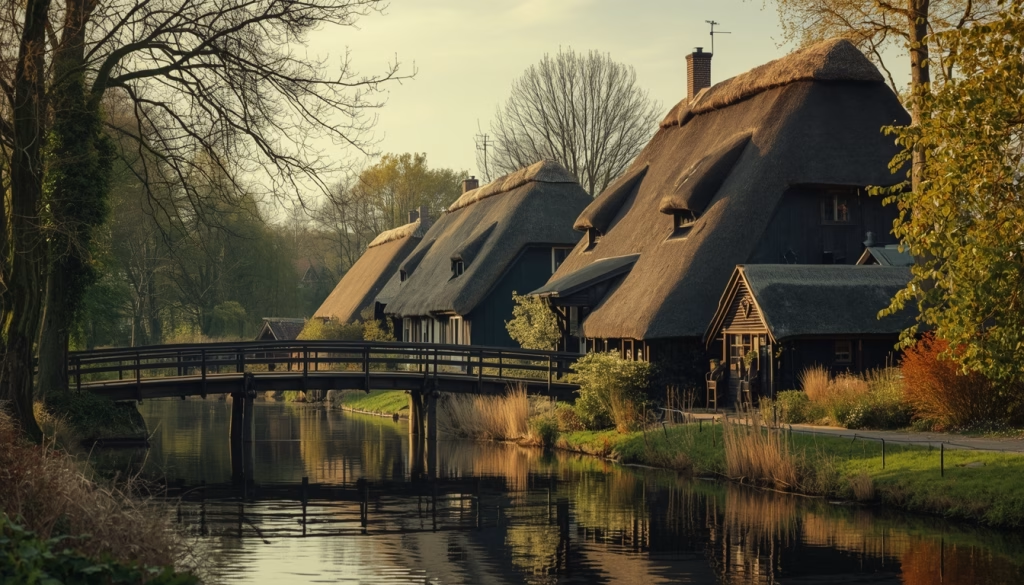
Tucked away in the Netherlands, the small village of Giethoorn is often called the “Venice of the North,” and for good reason. Built around a network of narrow canals, the village is almost entirely free of paved roads. The only way to get around is by foot, bicycle, or boat. No cars, no motorbikes, no traffic jams.
The village dates back to the 13th century and was originally built on peat extracted from the land, which left behind the winding waterways that now define its character. Locals and visitors alike travel between the charming thatched-roof farmhouses by wooden punt boat, and the loudest sounds you will typically hear are birdsong and the gentle lapping of water. Giethoorn has since become one of the Netherlands’ most beloved hidden gem travel destinations, drawing visitors from around the world who come simply to experience what a life without traffic actually feels like.
Frequently asked question: Where is the village with no roads in Europe? Giethoorn is located in the Overijssel province of the Netherlands and is easily accessible by car or train from Amsterdam.
Fact 2: China Built a Full-Scale Replica of an Austrian Village (Hallstatt, Austria)
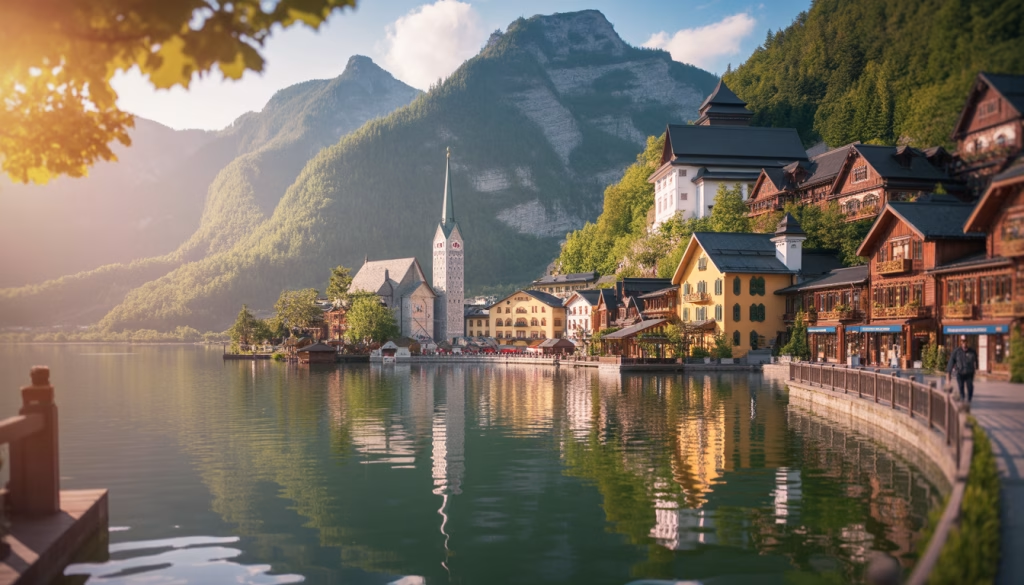
The tiny Austrian village of Hallstatt, nestled beside a glassy mountain lake in the Salzkammergut region, is so breathtakingly picturesque that it inspired a full-scale replica, built thousands of miles away in Guangdong, China. The Chinese version, located in the city of Huizhou, was constructed around 2012 and replicates Hallstatt’s iconic lakeside architecture, church steeple, and alpine aesthetic almost point for point.
The original Hallstatt has a population of fewer than 800 people, yet it receives over a million tourists a year, many of them from China. When locals in the real Hallstatt first learned about the copy, reactions were mixed, somewhere between flattery and bewilderment. The Austrian village is a UNESCO World Heritage Site, and its history goes back over 7,000 years, making it one of the oldest continuously inhabited communities in the world and one of the most Instagrammable travel destinations in all of Europe. No replica can quite capture that.
Frequently asked question: Why is Hallstatt so famous? Hallstatt is famous for its stunning Alpine scenery, ancient salt mining history, and picture-perfect lakeside setting that has made it one of the most photographed villages in Europe.
Fact 3: Iceland Has Zero Mosquitoes (And Why It Matters for Travelers)
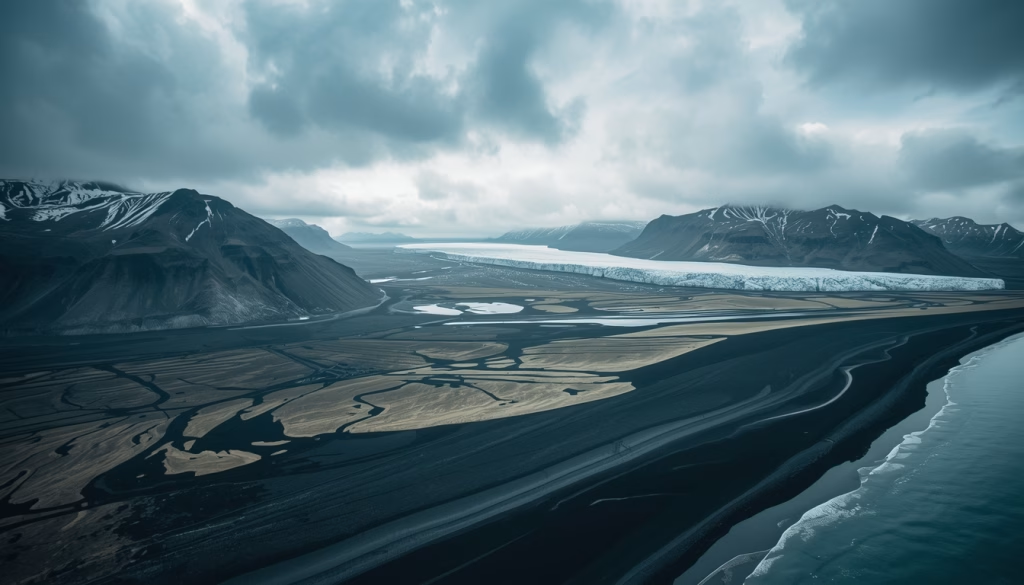
Travelers to Iceland often notice something refreshing during the summer months: the complete absence of mosquitoes. While much of Europe endures the familiar nuisance of buzzing and biting, Iceland is one of the very few countries in the world where mosquitoes simply do not exist, making it one of the best outdoor travel destinations in Europe for those who love hiking, camping, and exploring in comfort.
The reason comes down to the island’s unique climate. Mosquitoes require standing water to breed, and they thrive in environments where temperatures rise gradually and consistently. Iceland’s weather is notoriously unpredictable, with temperatures fluctuating rapidly in ways that interrupt the mosquito life cycle before it can complete itself. Neighboring Greenland does have mosquitoes, making Iceland’s status all the more remarkable. Midges and black flies still make an appearance in some areas, but mosquito-free summers are a genuine selling point for one of the world’s most visited adventure travel destinations.
Frequently asked question: Why does Iceland have no mosquitoes? Iceland’s rapidly shifting temperatures and unstable freeze-thaw cycles prevent mosquitoes from completing their breeding cycle, making the island naturally mosquito-free.
Fact 4: A French-Spanish Island That Changes Countries Every Six Months (Pheasant Island)
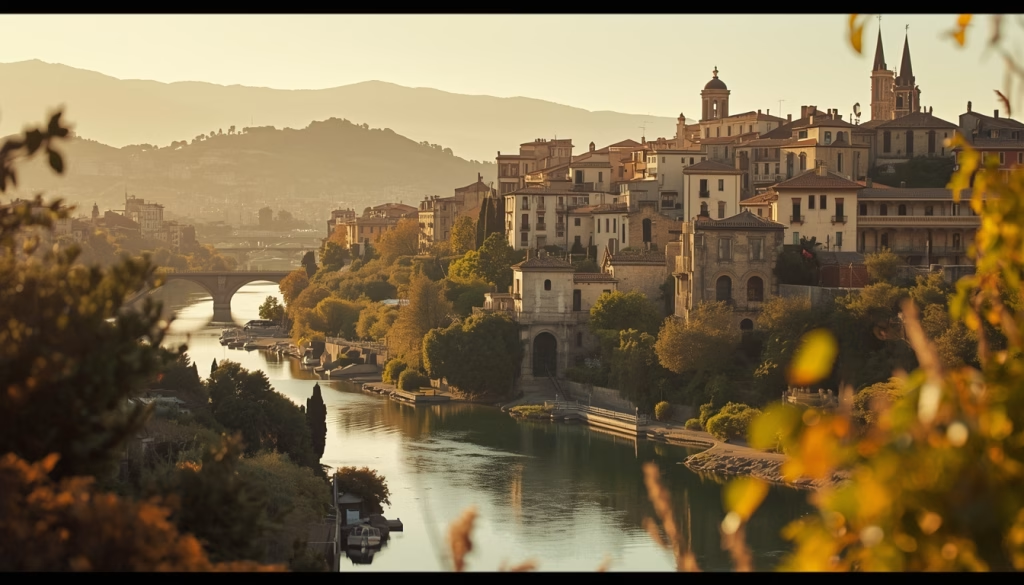
Sitting in the Bidasoa River on the border between France and Spain lies a tiny, unremarkable island called Pheasant Island, and it holds the distinction of being the world’s oldest surviving condominium territory jointly governed between two nations since 1659.
Under the Treaty of the Pyrenees, France and Spain agreed to alternate sovereignty over the island every six months. From February 1st to July 31st, the island falls under Spanish administration through the Spanish Navy. From August 1st to January 31st, it becomes French territory managed by the French Navy. The island itself is tiny, uninhabited, and largely inaccessible to the public. Yet its legal and historical significance is enormous. It was the site of the peace treaty that ended the Franco-Spanish War and even hosted the proxy marriage of French King Louis XIV to the Spanish Infanta Maria Theresa. For over 360 years, it has quietly swapped flags twice a year without incident, making it one of Europe’s most unique and unusual travel history facts.
Frequently asked question: What island changes countries every 6 months? Pheasant Island, located on the Bidasoa River between France and Spain, alternates sovereignty between the two countries every six months under a treaty signed in 1659.
Fact 5: Berlin Is Still Divided From Space (Cold War Street Lights)
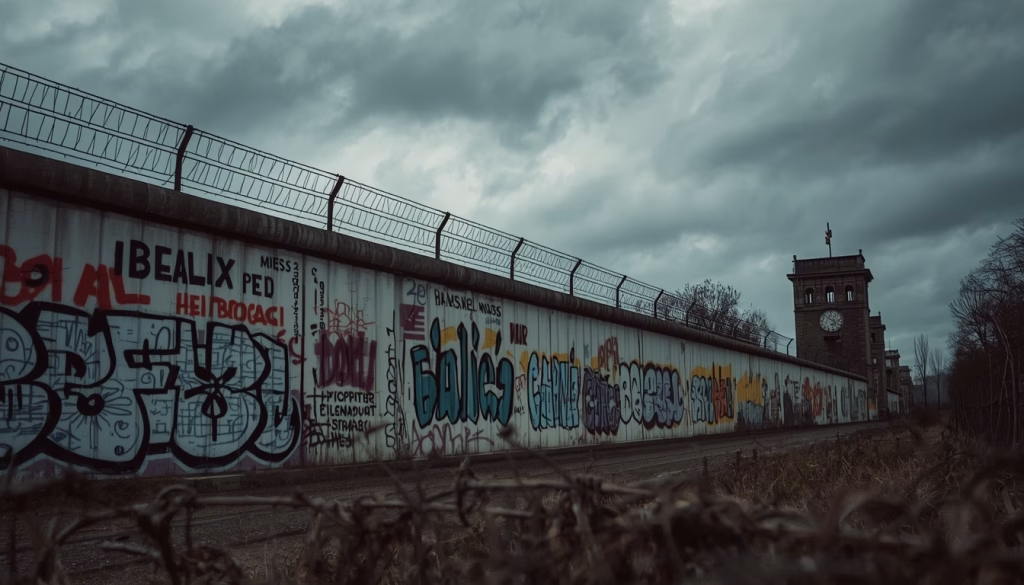
The Berlin Wall fell in 1989, but if you look at satellite images of Berlin at night, you can still see the ghost of it. The eastern and western halves of the city glow in subtly different colors, a visible reminder of the decades-long division that defined the city during the Cold War, and one of the most surprising Europe travel facts for history lovers.
The reason is surprisingly simple: the two halves of Berlin never fully standardized their street lighting. West Berlin historically used mercury-vapor lamps, which cast a cool blue-white light, while East Berlin relied on sodium-vapor lamps, which emit a warm yellow-orange glow. Long after reunification, replacing thousands of streetlights city-wide remained a slow and expensive process. The result is that astronauts aboard the International Space Station have reportedly been able to identify the former border of Berlin purely by the difference in light color, no map required. The city has been gradually updating its lighting infrastructure over the years, but the distinction remains partially visible, turning a routine look at Earth from orbit into an unexpected history lesson.
Frequently asked question: Can you still see the Berlin Wall from space? Yes, due to different street lighting used in East and West Berlin during the Cold War, the former border remains faintly visible in satellite images of the city at night.
Europe is full of stories hiding in plain sight, tucked into its waterways, its borders, its light posts, and even its replicas. Stay tuned for Part II.
For more travel inspiration, hidden destination guides, and weird facts from around the world, visit our blog and subscribe to stay updated every week.
Need help crafting compelling travel content or conducting destination research for your brand? Explore our professional writing and research services to see how we can help tell your story.
Looking to grow your travel platform or maximize your content’s earning potential? Check out our data analytics and monetization services to take your travel brand to the next level.

About The Hotel Rover
The Hotel Rover is a travel discovery platform that helps travelers quickly find and compare hotels anywhere in the world. The app makes it easy to explore destinations, discover great accommodations, and identify the best places to stay for any trip.
Designed for convenience and smart travel planning, The Hotel Rover allows users to compare hotel options, evaluate different stays, and make informed decisions before booking. Whether you are planning a vacation, a weekend getaway, or a business trip, The Hotel Rover helps you find the perfect stay with confidence. Search hotels now and start planning your next trip.
